Mingw-w64
Introduction
AI introduction
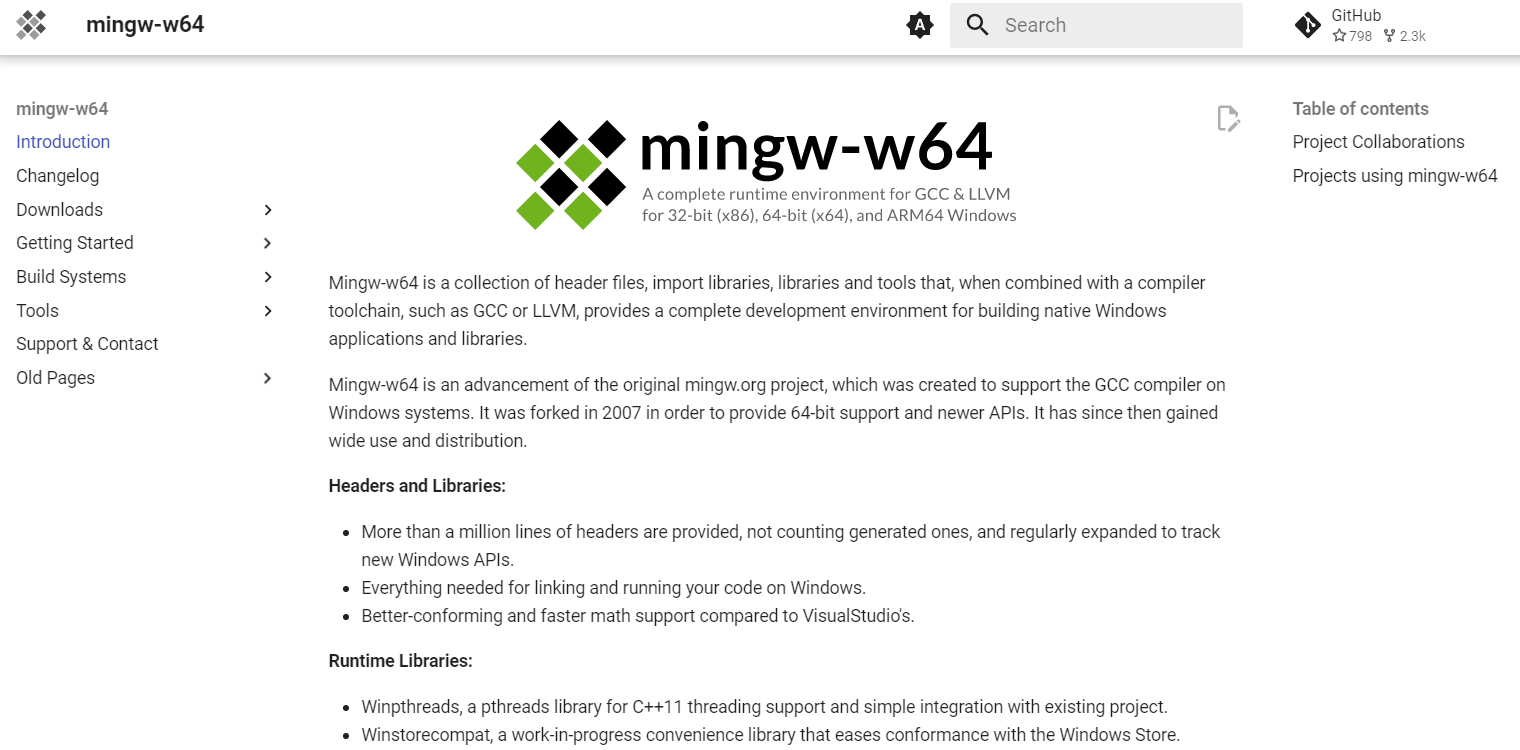
MinGW-w64 is an advanced version of the original MinGW (Minimalist GNU for Windows) project, providing a complete GNU Compiler Collection (GCC) toolchain for 32-bit and 64-bit Windows development. It allows developers to create native Windows applications without relying on third-party DLLs.
Key Features:
- Dual Architecture Support:
i686(32-bit) &x86_64(64-bit) Windows binaries.
- Modern GCC Toolchain:
- Supports C, C++, Fortran, Ada, and more (latest GCC 13+).
- No External Dependencies:
- Produces standalone
.exefiles (no need for Cygwin/MSYS DLLs).
- Produces standalone
- Compatibility:
- Works with Windows 7/10/11 and supports UCRT (Universal C Runtime).
- Open Source & Community-Driven:
- Actively maintained on GitHub.
Use Cases:
- Cross-platform development, game modding, system tools, and legacy software maintenance.
Official Website: https://www.mingw-w64.org/
Image
Get
Having trouble downloading?
If you encounter any issues during the download process, refer to the following solutions:
Link invalid or incorrect How to download the ed2k link How to download the magnet link How to download the .torrent file Other problemsNote
About MinGW
MinGW-w64 is an enhanced version of the original MinGW (Minimalist GNU for Windows). It is officially supported by GCC and receives continuous updates, making it the recommended choice today.
The original MinGW is now primarily community-maintained but can still be used for basic Windows development.
Official website: open
SourceForge downloads: open
Meaning of Terms in MinGW Naming
In MinGW (Minimalist GNU for Windows) toolchain naming, terms like posix, win32, sjlj, dwarf, and seh refer to threading models and exception handling mechanisms. Here’s a detailed explanation:
1. Threading Models
- posix: Uses POSIX threads (pthreads), compatible with Unix/Linux standards, ideal for cross-platform code.
- win32: Uses native Windows threads (Win32 threads), relying on Windows API. Better performance but not POSIX-compliant.
2. Exception Handling
- sjlj (SetJump/LongJump): Cross-function exception handling via
setjmp/longjmp. Works on 32/64-bit but has lower performance. - dwarf: Uses DWARF-2 debug format for exceptions. 32-bit only, faster than SJLJ.
- seh (Structured Exception Handling): Leverages Windows SEH. 64-bit only, best performance.
Common Naming Examples
i686-posix-dwarf→ 32-bit, POSIX threads, DWARF exceptions.x86_64-posix-seh→ 64-bit, POSIX threads, SEH exceptions.i686-win32-sjlj→ 32-bit, Win32 threads, SJLJ exceptions.
How to Choose?
- For 64-bit: Prefer
seh(best performance). - For 32-bit: Choose
dwarf(faster) orsjlj(more compatible). - Threading: Use
posixfor Linux compatibility orwin32for native Windows development.